How Polyurea Coatings Extend Wastewater Infrastructure Lifespan and Reduce Maintenance Costs

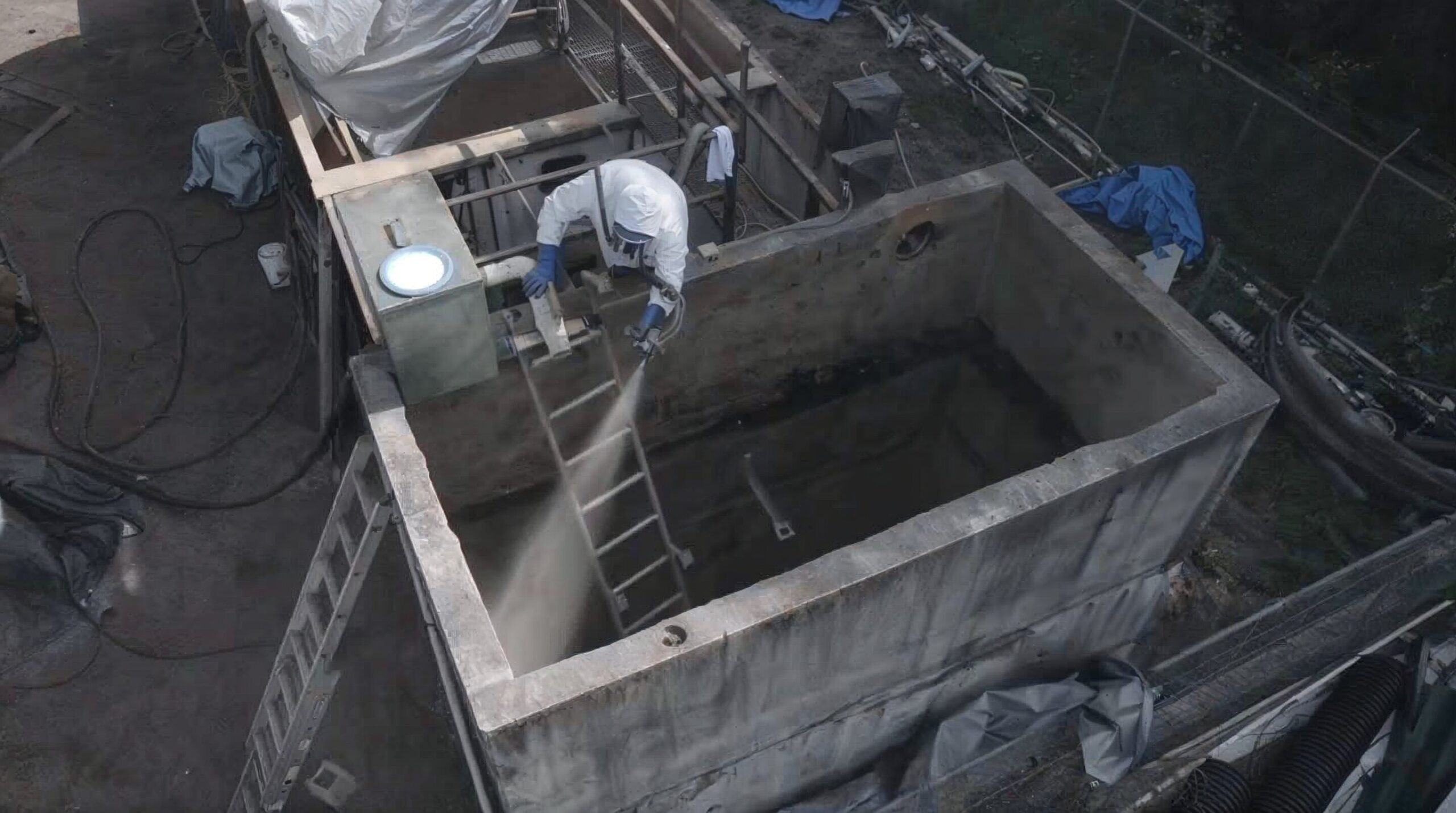
The economic argument for polyurea protective coatings in wastewater infrastructure transcends the immediate cost of application. When evaluated through the lens of lifecycle cost analysis — accounting for avoided maintenance events, extended structural service life, reduced treatment bypass costs, and deferred capital replacement — polyurea coatings consistently demonstrate a return on investment that few other rehabilitation technologies can match. Understanding why requires a detailed examination of the failure mechanisms that polyurea prevents and the operational disruptions it avoids.
The Chemistry of Polyurea Formation
Polyurea is formed by the rapid reaction between an isocyanate component — typically methylene diphenyl diisocyanate (MDI) or a polymeric MDI variant — and an amine-terminated polyether or polyester resin blend. Unlike polyurethane, which incorporates hydroxyl-terminated polyols and is sensitive to moisture during cure, polyurea’s amine components react with isocyanates approximately 1,000 times faster than hydroxyl groups, producing a gel time measured in seconds rather than minutes. This extraordinary reactivity is both the defining performance advantage of polyurea and the technical challenge that requires specialized heated, high-pressure plural-component equipment for its application.
The resulting polymer network is an elastomeric solid with tensile strength typically ranging from 2,500 to 4,500 psi, elongation at break exceeding 300-400%, and hardness adjustable from Shore A 40 to Shore D 80 through formulation modification. These mechanical properties are retained across a broad temperature range and after prolonged immersion in the aqueous chemical environments characteristic of wastewater infrastructure — a combination that no single-component coating system can replicate.
Microbial Corrosion: The Primary Threat to Concrete Sewer Infrastructure
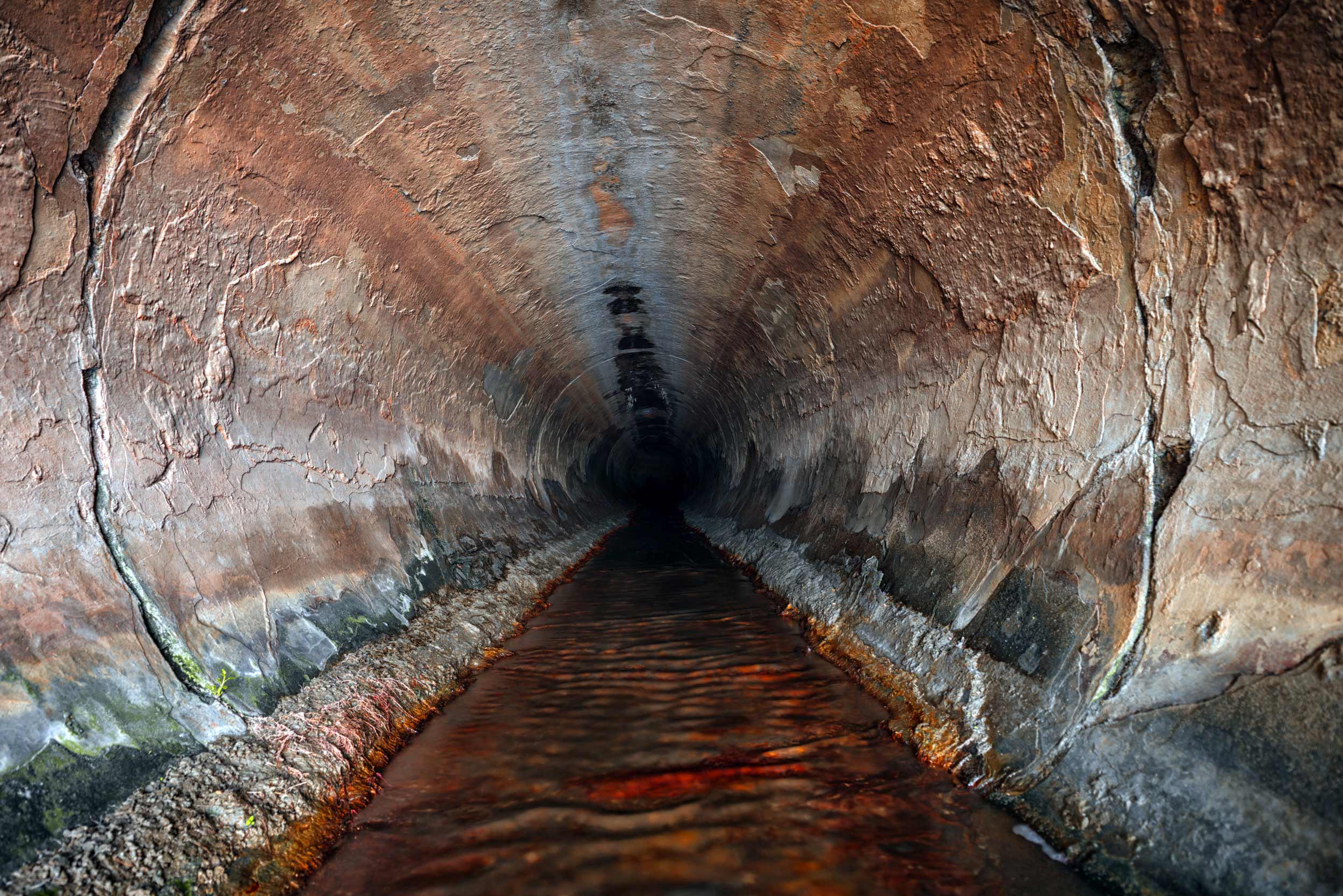
The dominant deterioration mechanism in concrete sewer infrastructure is microbially induced corrosion (MIC), a two-stage biological process that converts hydrogen sulfide released by anaerobic bacteria in the wastewater stream into sulfuric acid that aggressively attacks concrete. In the first stage, sulfate-reducing bacteria (primarily Desulfovibrio species) in the submerged sediment and biofilm communities metabolize sulfate in the wastewater, producing hydrogen sulfide gas (H₂S). This gas partitions into the sewer atmosphere above the waterline, where it is absorbed into the moisture film on concrete surfaces.
In the second stage, sulfur-oxidizing bacteria — particularly Thiobacillus thiooxidans and related acidophilic species — oxidize the absorbed hydrogen sulfide through sulfuric acid (H₂SO₄) as a metabolic byproduct. At H₂SO₄ concentrations that routinely reach pH values below 1.0 in severe sewer environments, concrete is rapidly dissolved. The calcium silicate hydrate phases that provide concrete its compressive strength are solubilized, leaving behind a soft, friable gypsum residue. Deterioration rates in severely affected structures can exceed 10 millimeters of concrete loss per year, and in high-strength-waste industrial sewer tributaries, even faster.
A polyurea coating applied over properly prepared concrete substrate eliminates MIC by two mechanisms: it physically seals the concrete surface from contact with the biologically generated sulfuric acid, and it eliminates the micro-porous habitat that Thiobacillus communities require to establish and maintain their acid-generating biofilm. A seamless, non-porous polyurea membrane presents no suitable surface for the initial attachment and colonization that initiates the MIC process.
Quantifying Maintenance Cost Reduction
The maintenance savings from polyurea coating programs are measurable at multiple levels of a wastewater utility’s operations. At the structure level, coated manholes and wet wells require dramatically less frequent internal cleaning than uncoated concrete, as the smooth, low-surface-energy polyurea membrane does not accumulate the mineral deposits and biological fouling that build up on rough concrete. Cleaning intervals that might be annual or semi-annual for uncoated structures can typically be extended to 3-5 years for well-coated structures, directly reducing labor, equipment, and disposal costs.
At the system level, the elimination of infiltration and inflow (I/I) through sealed sewer structures reduces the hydraulic load on downstream collection system components and treatment plant processes. Extraneous water entering through cracks and deteriorated joints in unprotected structures dilutes the wastewater stream, requires additional pumping energy, and reduces treatment plant capacity during wet weather events that trigger I/I peaks. Systematic coating of deteriorated sewer structures has been documented to achieve I/I reductions of 20-40% in collection systems where structural infiltration is the dominant source.
Emergency repair cost avoidance is perhaps the most difficult to quantify but ultimately the most significant financial benefit of proactive coating programs. When a sewer manhole or force main degrades to the point of structural failure, emergency repair costs routinely exceed the cost of proactive rehabilitation by factors of 5-10, reflecting the premium pricing of emergency contractor mobilization, traffic management, environmental containment, and expedited material procurement.
Lifecycle Cost Modeling for Infrastructure Managers
Formal lifecycle cost analysis for polyurea coating programs requires three data inputs: the initial cost of coating application per unit of protected structure, the projected service life extension achieved by the coating, and the avoided costs represented by maintenance events and structural replacement that would otherwise occur within the analysis period. All three inputs are now well-characterized by documented field experience, making rigorous lifecycle modeling accessible to infrastructure managers at the municipal utility level.
Typical polyurea coating application costs for manhole rehabilitation in North American municipal programs range from $8 to $18 per square foot of applied area, depending on surface preparation requirements, coating thickness specification, and project scale. At these cost levels, the application represents approximately 15-25% of the cost of full manhole replacement. Given a demonstrated service life extension of 20-30 years, the annualized cost of polyurea rehabilitation is consistently lower than the annualized cost of the replacement it defers — and substantially lower than the cumulative cost of repeated partial repairs using cementitious patch materials that do not address the underlying MIC mechanism.
Environmental and Regulatory Benefits
Beyond the direct financial returns, polyurea coating programs deliver environmental and regulatory benefits that are increasingly valued by utility managers operating under tightening National Pollutant Discharge Elimination System permits and state sanitary sewer overflow compliance agreements. Sealed sewer infrastructure eliminates the exfiltration pathways through which inadequately treated wastewater can reach groundwater resources, protecting drinking water supplies and sensitive aquatic ecosystems. The elimination of infiltration reduces overflow frequency and volume during wet weather events — a key performance metric in regulatory compliance programs for aging collection systems.
The carbon footprint implications of rehabilitation versus replacement are also significant. Preserving existing concrete and steel infrastructure through coating programs avoids the substantial embodied carbon associated with manufacturing and transporting new construction materials, an increasingly relevant consideration as municipal utilities develop climate action plans that include infrastructure management decisions.
Conclusion
Polyurea coatings earn their place as a cornerstone of wastewater infrastructure asset management not through marketing claims but through the verifiable mechanisms by which they prevent the deterioration processes that destroy sewer assets. The chemistry is sound, the installation performance is documented, and the lifecycle economics are favorable across a wide range of municipal operating conditions. For infrastructure managers tasked with extending the service life of aging wastewater systems within constrained capital budgets, polyurea coating programs represent one of the most cost-effective and technically validated tools available.
Start your own wastewater coatings business
Get equipment, training and lifetime support with the ArmorThane system — no franchise fees.